
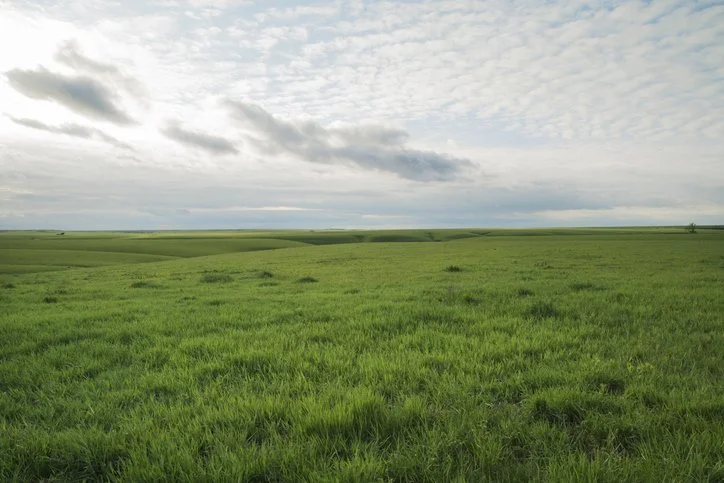
Pasture Management
Pasture Management Built for North Central Prairie Conditions
You manage property in North Texas — Muenster, Sherman, Gainesville, or surrounding areas — your pasture sits on ground very different from other parts of the state.
Your soil isn’t the heavy clay of the Blackland Prairie or the shallow limestone of the Hill Country. This region sits on sandstone and siltstone formations with irregular slopes and bedrock that often limits root development.
Pasture performance is determined underground long before problems appear above the grass. When soil structure, fertility, and water movement aren’t managed correctly, small issues compound.
Pastures thin. Weeds take over. Irrigation underperforms. Erosion slowly develops. What should be productive acreage turns into constant maintenance.
Healthy pasture begins with understanding the ground beneath it.
-
Soil Dictates Strategy
No two fields behave exactly the same.
Root depth may vary dramatically across a single property. Soil composition changes water retention. Slope influences runoff and erosion. Nutrients behave differently in sedimentary soils than in limestone regions.
That variability means pasture management cannot rely on generic advice or blanket treatments. Uniform fertilization programs. Standard watering schedules. One-size weed control plans.
These approaches ignore soil variability — and soil variability always wins. Effective pasture management in North Texas isn’t complicated. It’s specific.
-
Water Moves Nutrients Through the System
Grass doesn’t grow simply because water is present.
Water acts as the conduit that carries nutrients through the soil and into the plant’s root system. When water moves properly through healthy soil, nutrients become available and pasture grows dense and productive.
When water management is wrong — whether from poor drainage, uneven distribution, or incorrect watering — the entire system struggles.
Pasture management therefore requires thinking beyond grass and fertilizer. It requires managing the relationship between soil fertility, water movement, and root development. -
The Real Cost of Guessing
Most property owners don’t know what soil they actually have. They don’t know their root-depth limitations. They don’t know where water drains properly or where it collects. They don’t know which areas retain moisture and which dry out quickly.
So they guess.
They apply fertilizer to shallow soils where bedrock limits root growth. They under-water deeper soils that could sustain growth during drought. They treat every acre the same even when the soil behaves differently.
Guessing leads to wasted inputs, erosion repairs, declining pasture quality, and higher long-term costs.
Professional pasture management replaces guesswork with informed decisions.

What Professional Pasture Management Delivers
Pasture management is not mowing grass. It is the coordinated management of soil health, nutrient availability, and water movement across your property. When these systems are aligned, pasture becomes thicker, more resilient, and far easier to maintain.
-
Soil Testing & Targeted Fertilization
You’re either testing your soil or paying to guess.
We evaluate soil composition, pH balance, nutrient levels, and root-zone limitations specific to your property. Fertilization strategies are then tailored to the conditions that actually exist.
No blanket applications. No wasted input. Improved pasture density and healthier root systems.
-
Strategic Weed Management
Weeds don’t stay contained. They spread.
We develop soil-specific weed management strategies designed to prevent invasive growth before it overtakes productive grass. Consistent management keeps pasture dense and productive instead of allowing brush and weeds to dominate.
-
No-Till Drill Seeding & Cover Crops
Pasture improvement sometimes requires more than fertilization and mowing. No-till drill seeding and cover crops can improve stand density, protect soil structure, and support long-term fertility without unnecessary ground disturbance.
-
Water Budgeting & Moisture Planning
North Texas weather is unpredictable. Drought cycles are part of the landscape. We assess water sources, evaluate distribution, calculate current and future water demand, and align irrigation systems with your soil’s retention capacity.
The goal is not simply watering more. It’s delivering the right amount of water at the right time so soil nutrients remain available and pasture remains productive.
-
Tractor Mowing & Pasture Maintenance
Timing matters. Proper mowing maintains grass within its productive growth cycle and prevents overgrowth that weakens pasture health. Done correctly, it supports stronger root development and healthier soil performance.
We manage equipment, scheduling, and execution so pasture remains controlled and productive without constant weekend maintenance.
-
Managed Specifically for North Texas Acreage
Pasture success depends on understanding the land beneath it.
JW Land & Water manages pasture based on the soil composition, slope, and moisture realities of North Central Prairie properties — not generalized advice from other regions of Texas.
We work with acreage owners, equestrian properties, and land investors who expect their land to perform.The result: Pasture that grows thicker, holds productivity longer, and requires fewer corrective inputs over time.
Schedule a Pasture Assessment
If you’re ready to stop guessing and start managing pasture based on real soil conditions, we’ll take a direct look at your property and outline a strategy built for North Texas ground.